When a homeowner and their insurance carrier reach an irreconcilable disagreement regarding the true financial cost to repair covered property damage, policyholders often believe their only options are accepting a lowball settlement check or hiring an expensive litigation attorney.
Fortunately, almost every standard homeowner property policy contains a powerful, legally binding alternative dispute resolution mechanism known as the Appraisal Clause. The appraisal process is designed specifically to resolve disputes regarding the amount of loss (pricing and scope quantity) quickly and impartially without court involvement.
To invoke appraisal, either the policyholder or the insurance carrier sends a formal written demand. Each party then selects an independent, competent, and disinterested appraiser (typically experienced construction estimators, general contractors, or public adjusters) within 20 days. The two appraisers then select a neutral third-party umpire.

The two appraisers review the loss independently, compare line-item differences, and attempt to reach an agreed valuation. If they agree, the written award is signed and becomes binding on both parties. If they disagree, their differences are submitted to the neutral umpire. An agreement signed by any two of the three individuals sets the final binding loss amount, forcing the carrier to pay the awarded sum.
The appraisal clause is strictly limited to valuation questions (how much it costs to repair the damage) rather than coverage questions (whether the loss is covered under the policy language). Because appraisal bypasses lengthy court dockets, awards are typically finalized in weeks rather than years, saving thousands in legal expenses.
Homeowners who invoke appraisal with well-documented, itemized Xactimate scopes and photographic proof consistently recover the true market funds needed to rebuild their home without out-of-pocket compromises.
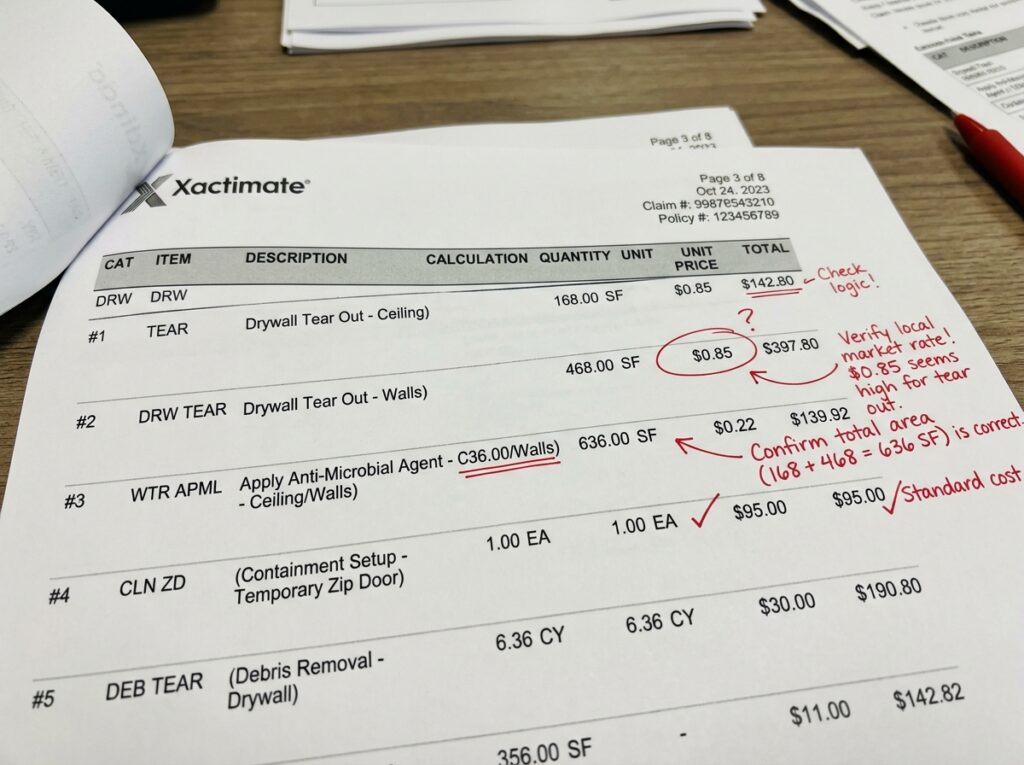
From an insurance claims and policyholder advocacy perspective, recovering the full replacement cost value (RCV) of damaged property requires detailed knowledge of insurance estimation software mechanics. Cross-referencing insurance adjuster estimates against actual construction contractor scopes frequently reveals significant line-item omissions in dust containment, code upgrades, scaffolding, and General Contractor Overhead & Profit (10 & 10).
By preparing an itemized contractor supplement backed by date-stamped moisture logs, building code citations, and manufacturer installation guidelines, policyholders can successfully bridge valuation gaps with insurance carriers. If a carrier refuses to negotiate in good faith, policyholders retain the legal right to invoke the statutory Appraisal Clause, allowing an independent umpire and appraisers to establish a fair, binding claim settlement.
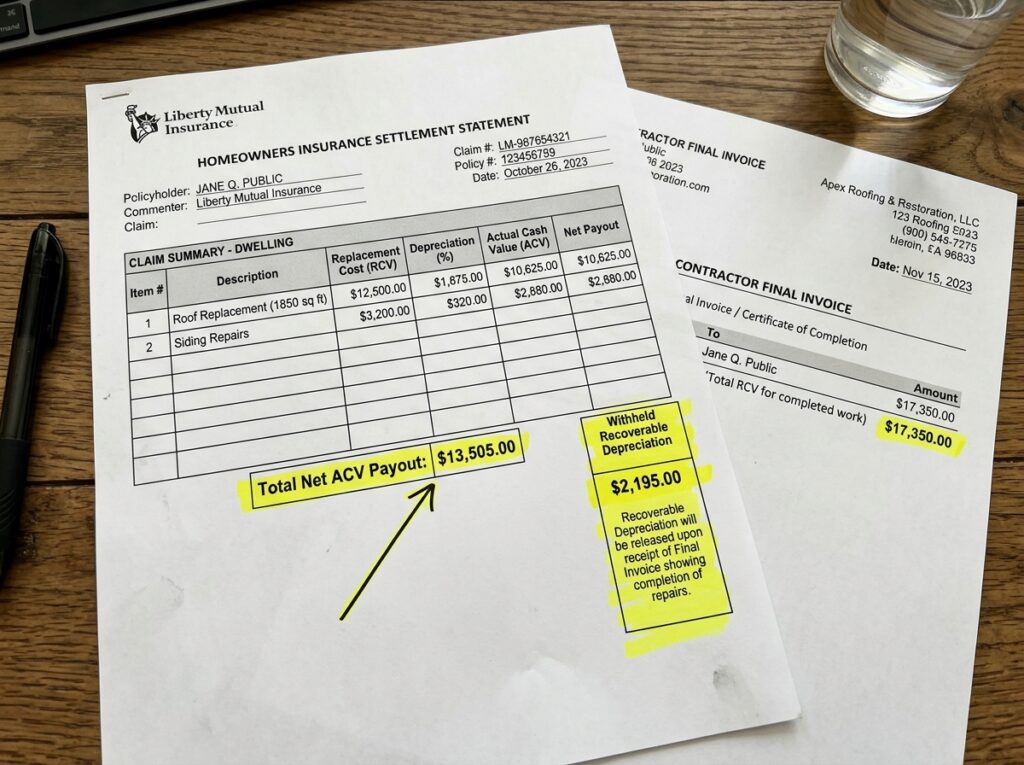
Navigating the property insurance claim life cycle requires policyholders to adhere strictly to statutory policy deadlines. Most standard homeowner insurance policies mandate that a formal, notarized Sworn Proof of Loss statement be submitted within 60 days of the carrier’s initial written request. Furthermore, recoverable depreciation funds held in escrow must be formally claimed within 180 to 365 days from the date of loss. Maintaining organized digital copies of all contractor progress invoices, paid deductible receipts, and signed lien waivers guarantees that withheld depreciation funds are released promptly without administrative delays.
To prepare your scope proof before invoking appraisal, review our analysis on 10 commonly omitted Xactimate line items. For post-settlement depreciation release steps, see claiming withheld RCV depreciation. Review our professional background in About Benson Restoration.