Following a residential fire or furnace malfunction, the chemical composition of the soot deposited throughout the home varies dramatically depending on what fuel sources burned. Understanding the chemical nature of the residue is critical: using standard water-based household cleaners on complex soot can permanently set the discoloration, etch metallic finishes, and drive noxious odors deep into the pores of building materials.
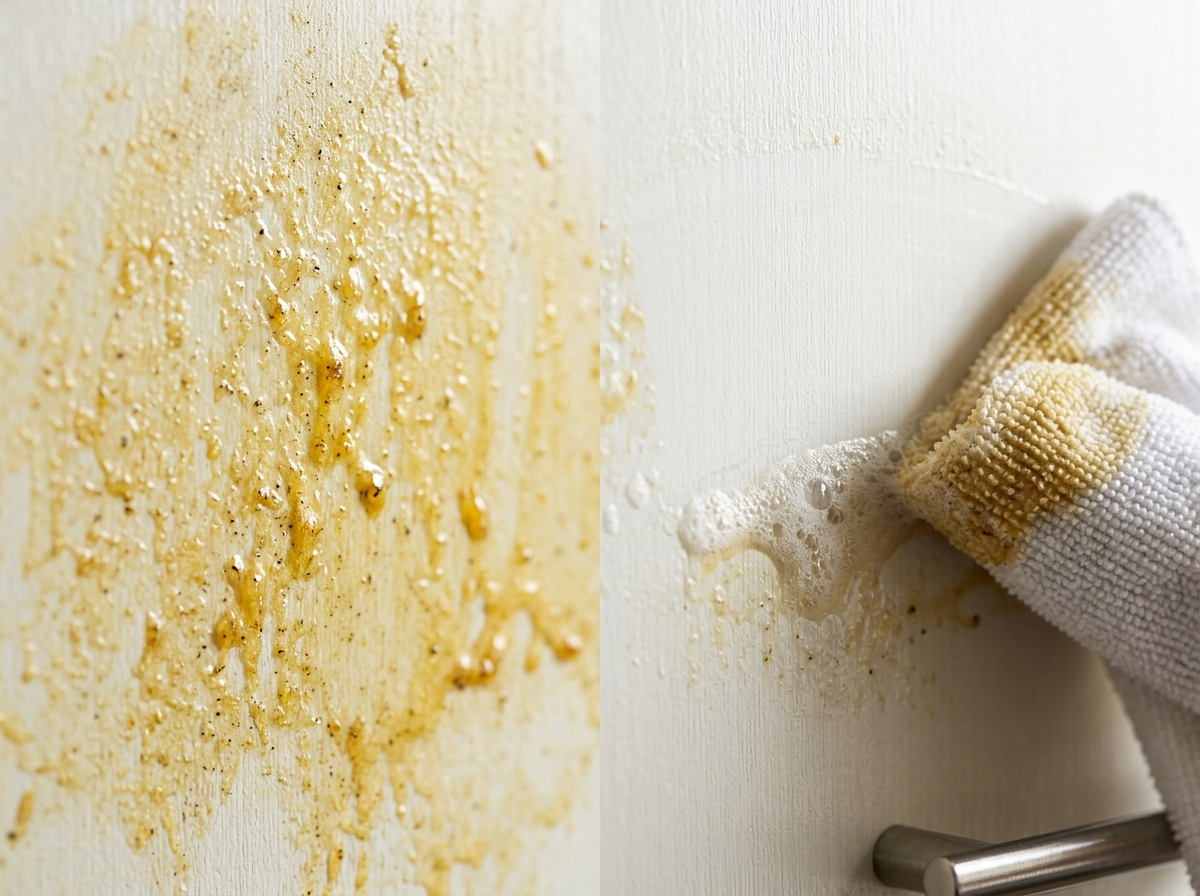
Protein soot is created by the slow, high-heat evaporation of kitchen fats, cooking oils, and animal proteins during stove-top fires. It leaves a nearly invisible, amber-yellowish greasy film that sticks tenaciously to varnished cabinetry, painted drywall, light fixtures, and window glass. Despite its low visual opacity, protein soot generates an overpowering, rancid odor that corrodes metals and discolors lacquer finishes if left untreated.
In contrast, synthetic soot is produced by burning plastics, vinyl flooring, synthetic carpets, and electronics. It forms dense, black, smeary carbon chains that easily transfer onto hands and walls. Cleaning synthetic soot requires specialized dry chemical sponges (vulcanized natural rubber) to lift carbon particles off surfaces without liquid smearing, followed by targeted alkaline degreasers.
To permanently eliminate embedded burnt odor molecules from wall cavities, structural framing, and subfloors, professional restorers deploy solvent-based thermal foggers. Thermal fogging heats deodorizing pairing compounds until they vaporize into microscopic aerosol droplets (0.5 to 2 microns). These droplets follow the exact penetration paths that the hot smoke took during the fire, chemically neutralizing volatile aromatic hydrocarbons at the molecular level.
Before thermal fogging, all reachable structural surfaces must be mechanically cleaned. Applying deodorizing fog over active soot deposits only masks the odor temporarily; true restoration requires removing the soot layer first so the neutralizing vapors can directly access the underlying wood pores and concrete masonry.
Following fogging, framing timbers are encapsulated using a pigmented shellac-based vapor-barrier primer. This impenetrable resin barrier seals any microscopic odor compounds permanently inside the wood grain, preventing future odor off-gassing when indoor temperatures and humidity rise during summer months.
In addition to mechanical cleaning and thermal deodorization, post-fire structural recovery requires a detailed air filtration protocol. Industrial HEPA air scrubbers equipped with activated carbon and potassium permanganate filter stages are deployed to chemically absorb volatile organic compounds (VOCs), aldehydes, and benzene vapors. These gas-phase filtration stages prevent toxic combustion byproducts from redepositing onto cleaned substrates or migrating through the building’s central HVAC supply ducts.
Insurance documentation for fire and smoke losses mandates line-item precision. Estimators compile photographic logs of all salvageable versus non-salvageable structural framing, duct cleaning certificates, and itemized personal property inventories with verified replacement values. Maintaining complete Xactimate line-item records (including CLNDODR and FRCBLST) ensures full carrier approval for all structural decontamination and odor encapsulation procedures.
Chemical soot mitigation also involves careful evaluation of surface porosities prior to applying liquid chemical neutralizers. Semi-porous materials such as acoustic ceiling tiles, unfinished wood joists, and exposed subflooring absorb acidic soot compounds rapidly. If liquid cleaners are applied directly to dry soot, the carbon particles become emulsified into a slurry that penetrates deeper into the substrate. Technicians always apply dry natural rubber chemical sponges first to mechanically capture surface soot before following with targeted alkaline neutralizers and solvent-based thermal fogging.
For continuous in-place odor remediation in occupied homes, read our detailed comparison on hydroxyl generators vs ozone machines. If structural framing has suffered visible carbonization, see our engineering guide on char depth assessment and dry ice blasting. Browse complete post-fire restoration procedures in our Fire & Smoke Damage Hub or consult our E-E-A-T specialists on our About Us Page.