When unexpected water ingress occurs—whether from a pressurized supply line rupture, water heater tank failure, or severe storm intrusion—the initial twenty-four hours dictate whether a home suffers minor cosmetic distress or catastrophic structural degradation. Water behaves as an active physical solvent, rapidly migrating through porous drywall, wicking upward through gypsum cores, and pooling beneath subfloor assemblies. Standard household box fans and open windows are completely incapable of overcoming the vapor pressure barriers required to pull trapped water out of closed wall cavities.
In professional restoration, we rely on the science of psychrometrics: the thermodynamic interaction between temperature, relative humidity, and atmospheric vapor pressure. When water enters structural assemblies, it immediately seeks equilibrium with the surrounding environment. Without commercial dehumidification, the air inside an enclosed room quickly reaches 100% relative humidity, halting evaporation entirely. At this saturation point, condensation forms on cooler un-flooded surfaces, triggering secondary damage across ceilings, cabinetry, and adjoining living spaces.
To reverse this process, certified technicians establish an aggressive drying chamber. By deploying Low-Grain Refrigerant (LGR) dehumidifiers alongside high-velocity axial air movers, we lower the specific humidity (measured in Grains Per Pound, or GPP) of the ambient air. This creates a steep vapor pressure differential between the saturated wood studs and the dry surrounding air, literally forcing moisture molecules out of the dense building materials into the airstream where they are condensed and pumped safely down a drain.
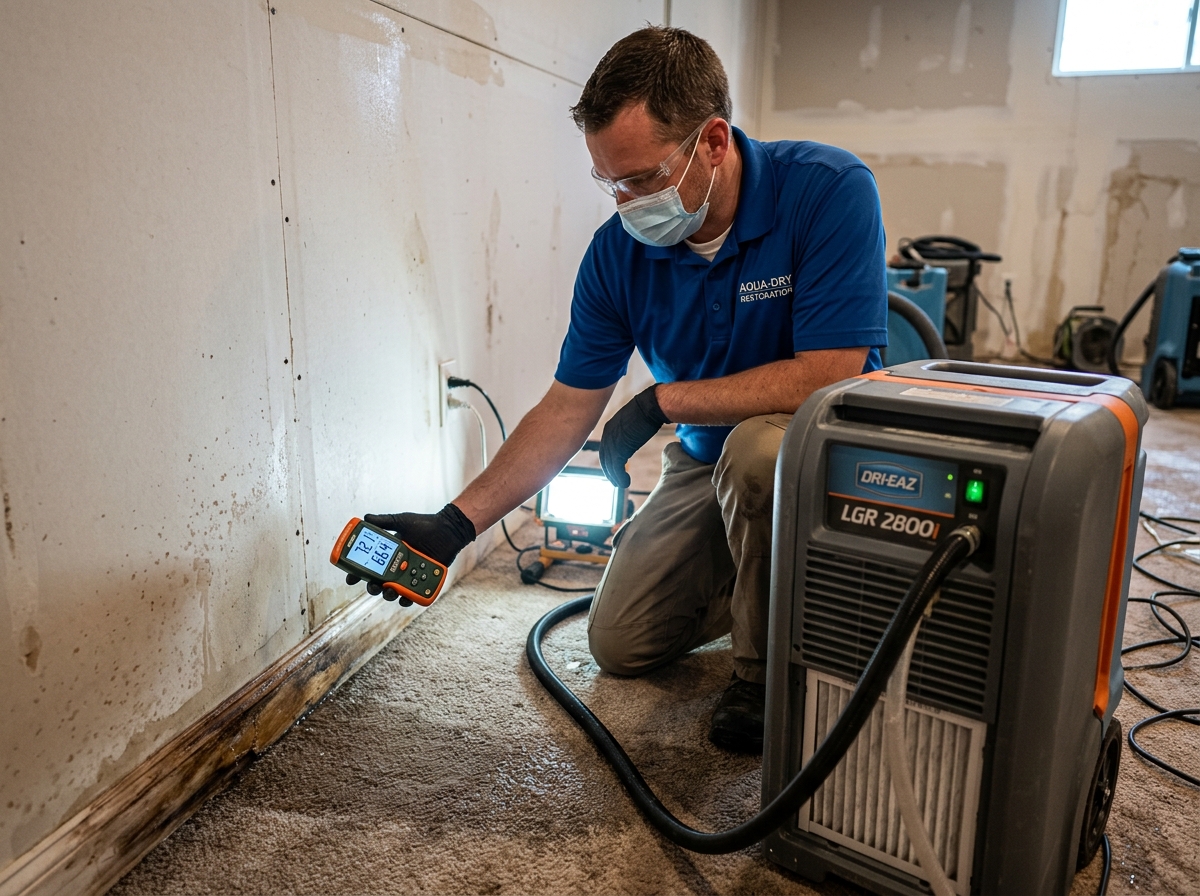
Thermal imaging cameras and non-invasive radio frequency moisture meters are critical during this first phase. Moisture often travels horizontally along bottom plates and behind baseboards without showing visible water stains on the surface paint. If this bound water is ignored, microbial spores will germinate and colonize the cellulose paper backing of the drywall within 24 to 48 hours. Proper documentation of daily psychrometric readings is also vital for your insurance adjuster to justify the required equipment runtime.
Furthermore, structural drying requires precise air velocity engineering. High-velocity air movers must be angled at approximately 15 to 45 degrees along perimeter walls to shear off the boundary layer of saturated air clinging to wet surfaces. By continuously stripping this stagnant micro-climate away from drywall and timber studs, the rate of evaporation is maximized without blowing excessive dust or debris into clean living areas.
Daily moisture logging using penetrative pin probes allows technicians to record specific Wood Moisture Equivalent (WME) percentages across multiple framing depths. In addition to drywall testing, technicians monitor the temperature differentials between ambient air and surface dew points to ensure conditions remain well outside the condensation zone. Once wood moisture levels drop below 15% and dry standard baselines are confirmed, the risk of structural dry rot and fungal decay is permanently arrested.
From an engineering standpoint, managing structural drying requires calculating specific moisture evaporation rates against the cubic footage of the affected structure. Technicians calculate the required pint removal capacity per day (AHAM rating) using the formula specified in the ANSI/IICRC S500 standard. By accounting for Class 1 through Class 4 water absorption factors, the precise ratio of LGR dehumidifiers and high-velocity air movers is configured to maintain a continuous grain depression exceeding 25 to 30 GPP throughout the structural drying cycle.
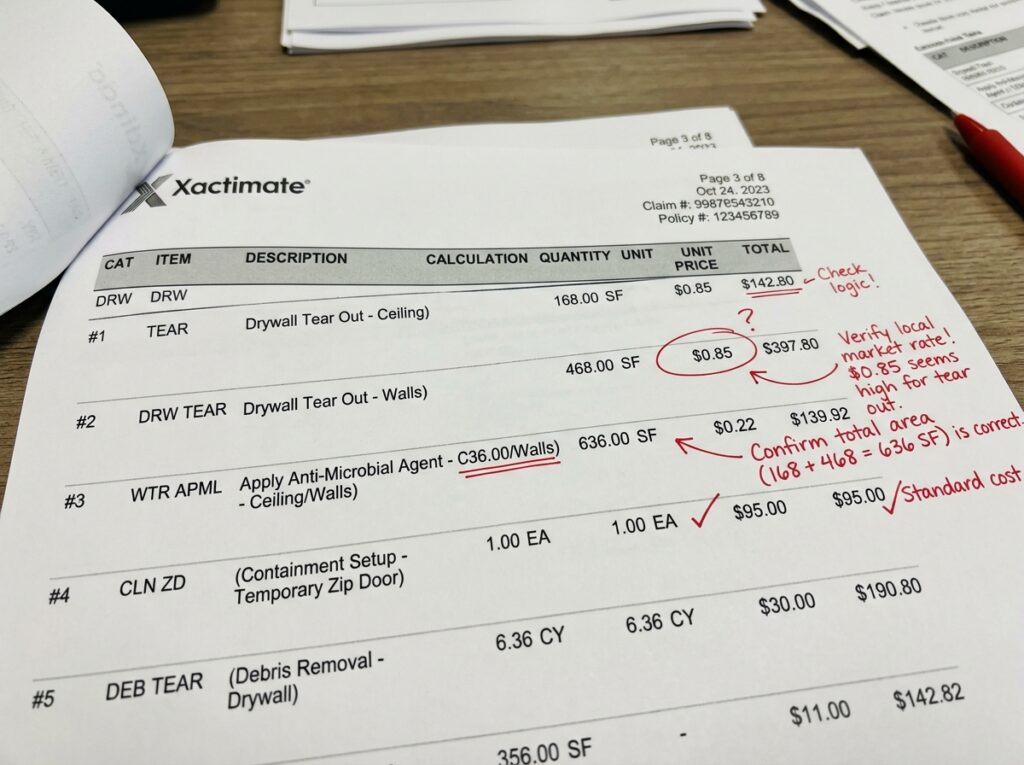
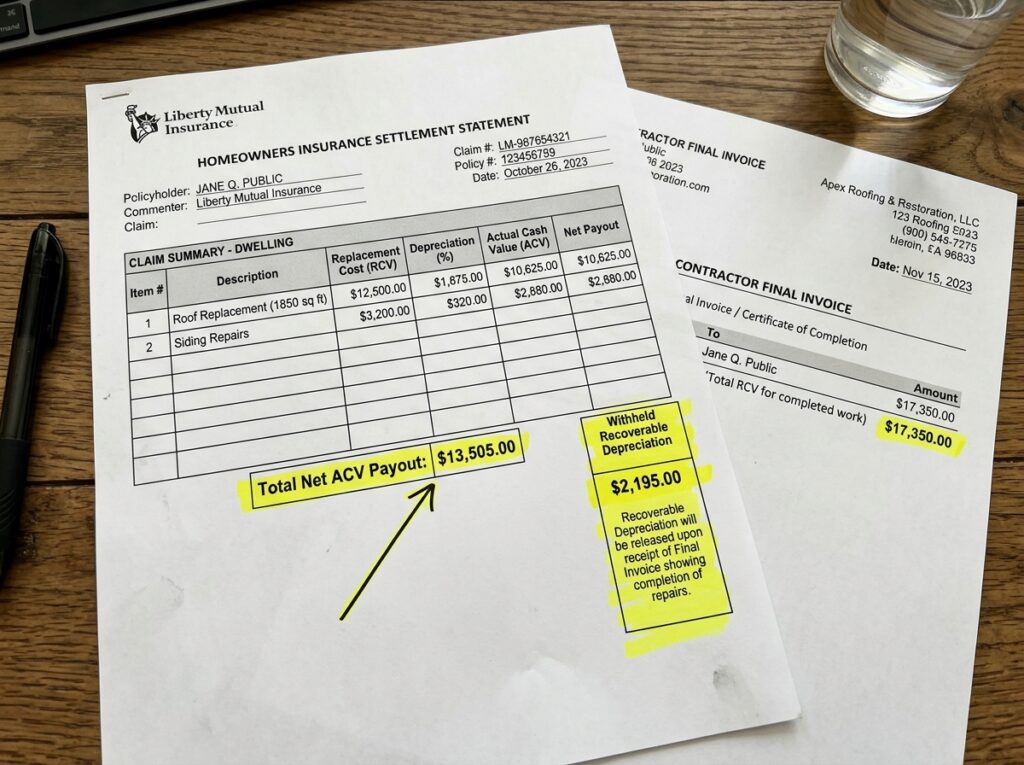
In addition to on-site moisture extraction, comprehensive field records must be compiled for insurance claim submittal. Every restoration phase—including daily psychrometric psychrometer logs, thermal imaging false-color screenshots, moisture map floor plans, and antimicrobial application certificates—is itemized using industry-standard Xactimate pricing codes (such as WTRDRY and WTRDH). This eliminates scope ambiguity with insurance desk adjusters and expedites claim reimbursement for emergency mitigation costs.
In addition to psychrometric calculations, certified technicians maintain a stringent drying checklist throughout the 72-hour emergency stabilization window. Moisture mapping begins at the initial source of intrusion and extends outward in all four compass directions until zero elevated moisture readings are detected on adjacent drywall assemblies. Infrared thermal imaging scans are repeated every 24 hours at the exact same times of day to establish comparative thermal evaporation curves. These objective data points prove that the structural assembly is returning to its dry standard baseline without requiring premature demolition of salvageable building materials.
Homeowners dealing with deep floor saturation should also review our guide on hardwood floor water damage and vacuum drying mats to prevent permanent floor warping. In cases where the water source originated from an appliance drain or sewage line, follow our mandatory Category 3 sewage backup sanitization protocols. To understand the complete scope of professional drying, explore our comprehensive Water Damage Restoration Knowledge Portal or speak with our field desk at Benson Restoration Dispatch.