When homeowners receive their initial insurance settlement paperwork after a property loss, they are often shocked to see that the check amount is thousands of dollars less than the estimated cost of repairs. Understanding the difference between Actual Cash Value (ACV) and Replacement Cost Value (RCV) is essential to claiming every dollar you are owed.
Replacement Cost Value (RCV) represents the actual financial cost to replace or repair damaged building materials at today’s market labor and material rates. Actual Cash Value (ACV) is calculated as RCV minus physical depreciation based on the age and pre-loss condition of the materials (e.g., an 8-year-old asphalt roof will be depreciated by approximately 40%).
Under standard Replacement Cost policies, the insurance company initially releases only the ACV payment minus your policy deductible. The difference—the ‘Recoverable Depreciation’—is held in escrow by the carrier until the repairs are physically completed by a licensed contractor.
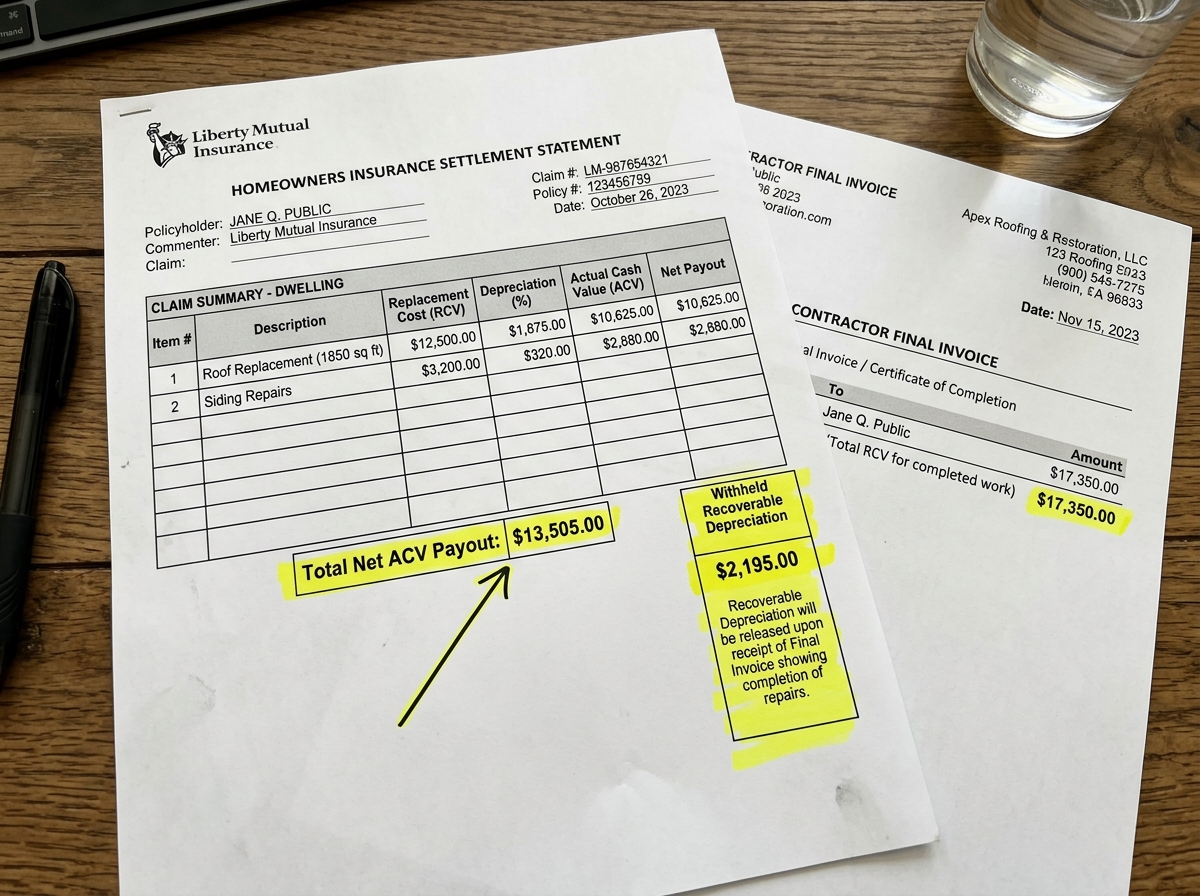
To recover this withheld depreciation, policyholders must submit a formal Depreciation Release Package before the policy’s contractual deadline (typically 180 to 365 days from the date of loss). This package includes itemized contractor final invoices, proof of paid deductible, signed unconditional lien waivers, and a signed Certificate of Completion.
If actual contractor repair costs exceed the initial ACV calculation due to unforeseen structural damage discovered during demolition, your general contractor must submit a formal supplement request before final invoicing. The carrier then adjusts the gross RCV figure, expanding the total depreciation pool payable to the homeowner.
Tracking claim correspondence and maintaining a dedicated loss journal with date-stamped emails and photos ensures that insurance desk adjusters cannot stall depreciation releases, allowing funds to be disbursed smoothly to finalize contractor accounts.
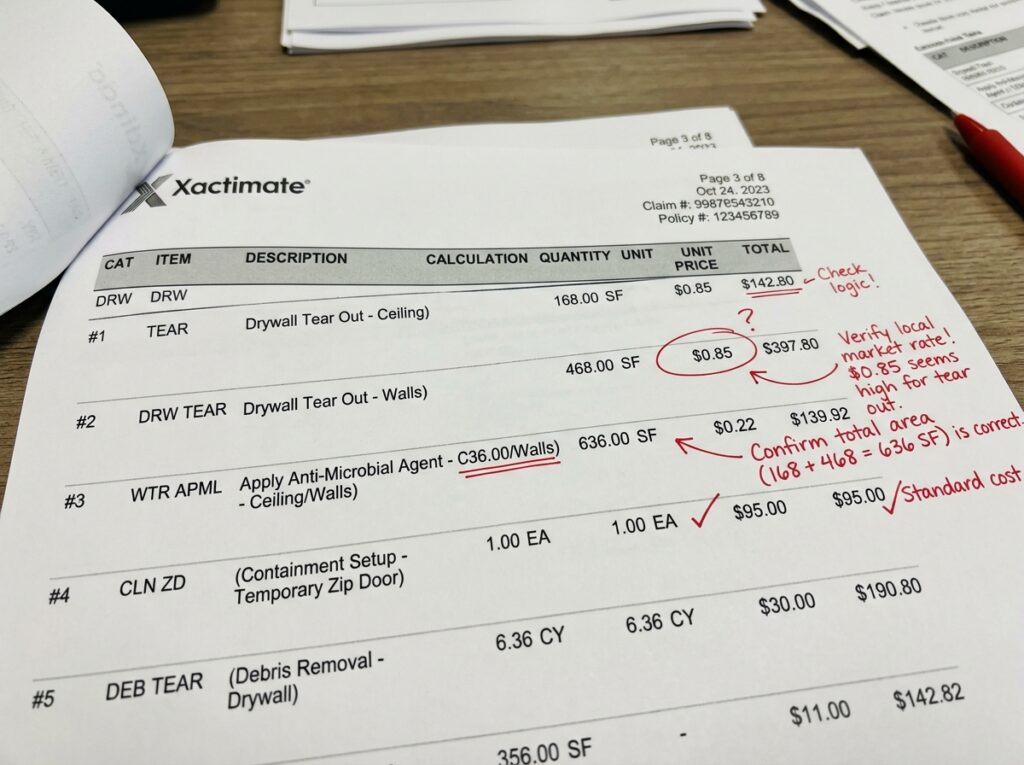
From an insurance claims and policyholder advocacy perspective, recovering the full replacement cost value (RCV) of damaged property requires detailed knowledge of insurance estimation software mechanics. Cross-referencing insurance adjuster estimates against actual construction contractor scopes frequently reveals significant line-item omissions in dust containment, code upgrades, scaffolding, and General Contractor Overhead & Profit (10 & 10).
By preparing an itemized contractor supplement backed by date-stamped moisture logs, building code citations, and manufacturer installation guidelines, policyholders can successfully bridge valuation gaps with insurance carriers. If a carrier refuses to negotiate in good faith, policyholders retain the legal right to invoke the statutory Appraisal Clause, allowing an independent umpire and appraisers to establish a fair, binding claim settlement.
Navigating the property insurance claim life cycle requires policyholders to adhere strictly to statutory policy deadlines. Most standard homeowner insurance policies mandate that a formal, notarized Sworn Proof of Loss statement be submitted within 60 days of the carrier’s initial written request. Furthermore, recoverable depreciation funds held in escrow must be formally claimed within 180 to 365 days from the date of loss. Maintaining organized digital copies of all contractor progress invoices, paid deductible receipts, and signed lien waivers guarantees that withheld depreciation funds are released promptly without administrative delays.
To ensure your initial estimate captures all required repair steps, read our guide on decoding insurance Xactimate estimates. If your carrier refuses to pay legitimate contractor costs, learn how to invoke the insurance appraisal clause. Explore all policyholder resources in our Insurance Claims Guidance Portal.