When fire breaches residential wall cavities, structural framing timbers (2×4 and 2×6 Douglas fir or Southern yellow pine studs, floor joists, and roof trusses) undergo surface pyrolysis. The resulting black carbonized layer, known as char, insulates the core of the timber but significantly reduces its effective cross-sectional area and structural load-bearing capacity.
As a licensed general contractor, determining whether a charred timber can be restored or must be removed requires a systematic char depth assessment. The standard rate of char penetration in standard dimensional lumber during a typical structural fire is approximately 1/40th of an inch per minute. By scraping back the soft char down to solid, light-colored virgin wood with a calibrated depth gauge, we calculate the remaining effective timber cross-section.
If structural calculations confirm that the remaining uncharred wood meets building code load requirements (often bolstered by structural sistering), the char must be completely removed to eliminate smoke off-gassing. The gold standard for char removal is cryogenic CO2 dry ice blasting. Solid CO2 pellets (-109°F) are propelled at supersonic speeds against the charred wood.
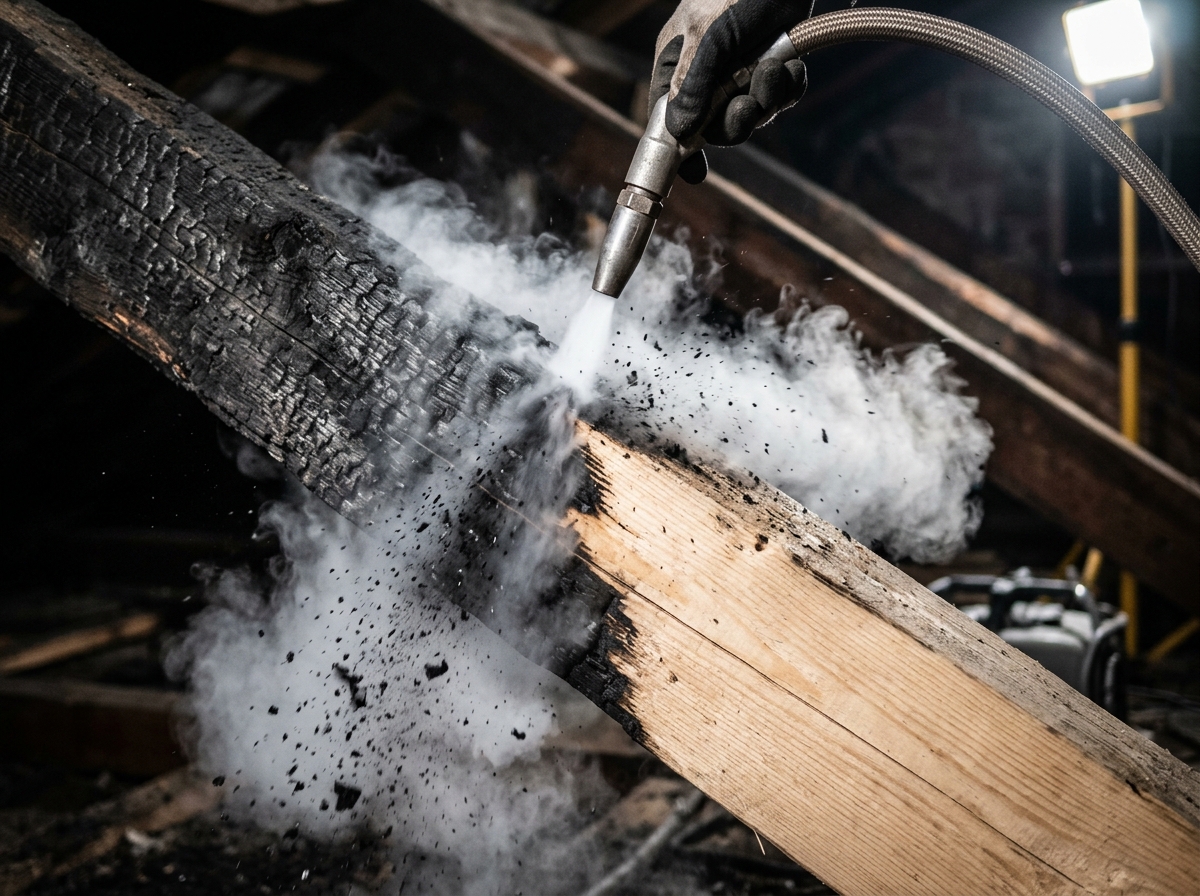
Upon impact, the extreme thermal shock micro-fractures the brittle carbonized char, and the dry ice sublimates instantly into carbon dioxide gas, expanding 800 times in volume. This explosive sublimation strips every trace of burnt wood out of crevices without creating secondary water damage or hazardous abrasive grit waste, leaving behind clean, sound timber ready for clear shellac vapor-barrier sealing.
Compared to manual wire-brushing or sandblasting, dry ice blasting reaches tight interstitial corners, roof truss gusset plates, and wiring penetrations without damaging surrounding copper plumbing or electrical conduits. The process is completely non-conductive, non-flammable, and generates zero hazardous secondary waste products.
Following dry ice decontamination, the exposed timber receives a thorough HEPA vacuuming and is sprayed with an alcohol-based pigmented shellac sealer. This encapsulates any remaining microscopic burnt scent molecules, ensuring the rebuilt structure passes pre-drywall environmental air testing.
In addition to mechanical cleaning and thermal deodorization, post-fire structural recovery requires a detailed air filtration protocol. Industrial HEPA air scrubbers equipped with activated carbon and potassium permanganate filter stages are deployed to chemically absorb volatile organic compounds (VOCs), aldehydes, and benzene vapors. These gas-phase filtration stages prevent toxic combustion byproducts from redepositing onto cleaned substrates or migrating through the building’s central HVAC supply ducts.
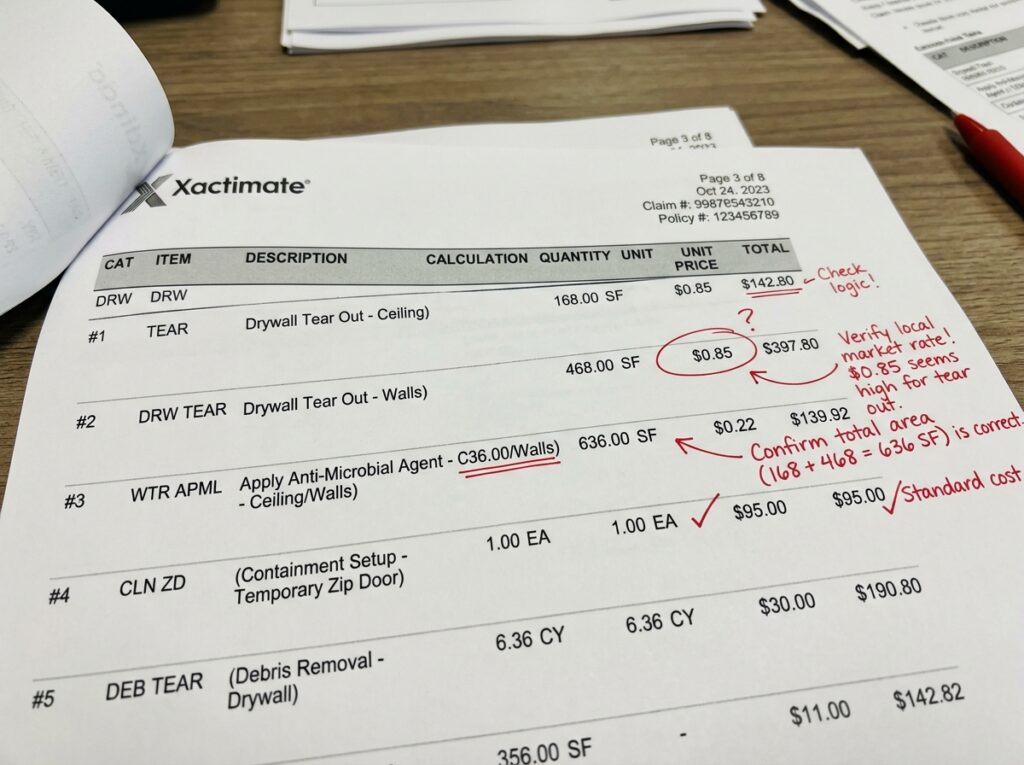
Insurance documentation for fire and smoke losses mandates line-item precision. Estimators compile photographic logs of all salvageable versus non-salvageable structural framing, duct cleaning certificates, and itemized personal property inventories with verified replacement values. Maintaining complete Xactimate line-item records (including CLNDODR and FRCBLST) ensures full carrier approval for all structural decontamination and odor encapsulation procedures.
Chemical soot mitigation also involves careful evaluation of surface porosities prior to applying liquid chemical neutralizers. Semi-porous materials such as acoustic ceiling tiles, unfinished wood joists, and exposed subflooring absorb acidic soot compounds rapidly. If liquid cleaners are applied directly to dry soot, the carbon particles become emulsified into a slurry that penetrates deeper into the substrate. Technicians always apply dry natural rubber chemical sponges first to mechanically capture surface soot before following with targeted alkaline neutralizers and solvent-based thermal fogging.
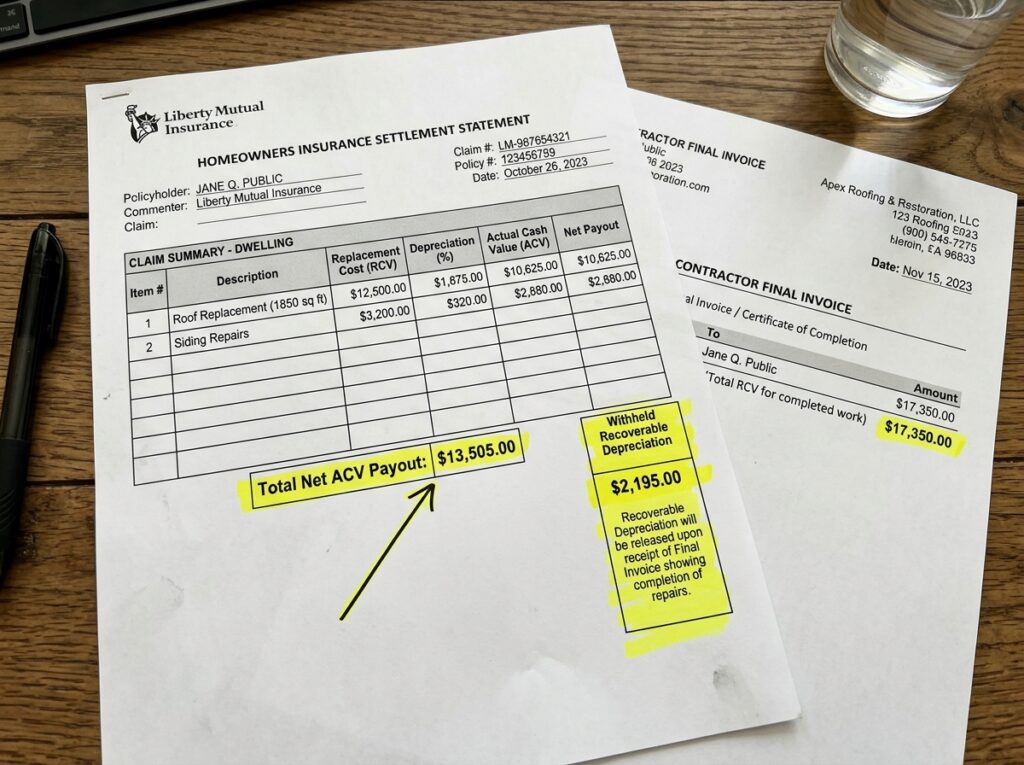
When framing repairs require municipal approvals, review our general contractor blueprint on navigating city permits and structural rebuilds. To ensure insurance coverage pays for necessary framing upgrades, see our guide on recovering withheld insurance depreciation funds. Explore all rebuild standards in our Rebuild Guidance Portal.