When severe weather strikes—whether from hurricane-force wind gusts, tornadic wind shear, heavy hail impact, or falling tree limbs—the exterior building envelope is frequently compromised. Broken windows and breached roof shingles leave home interiors vulnerable to torrential secondary rainfall.
Every standard homeowner insurance policy includes a mandatory ‘Duties After Loss’ clause. This condition legally requires the property owner to take all reasonable steps to protect the property from further damage. If an owner fails to secure a damaged roof and rain subsequently ruins interior ceilings, hardwood floors, and drywall, the insurance carrier can deny coverage for the secondary damage.
Professional emergency roof tarping requires specific contracting techniques. Nailing a tarp directly through shingles with roofing caps is a catastrophic error; wind uplift quickly tears the eyelets, and the nail penetrations create hundreds of new leak points. Instead, licensed crews use heavy-duty, UV-resistant woven poly tarps, wrapping the top edge over the roof ridge line.
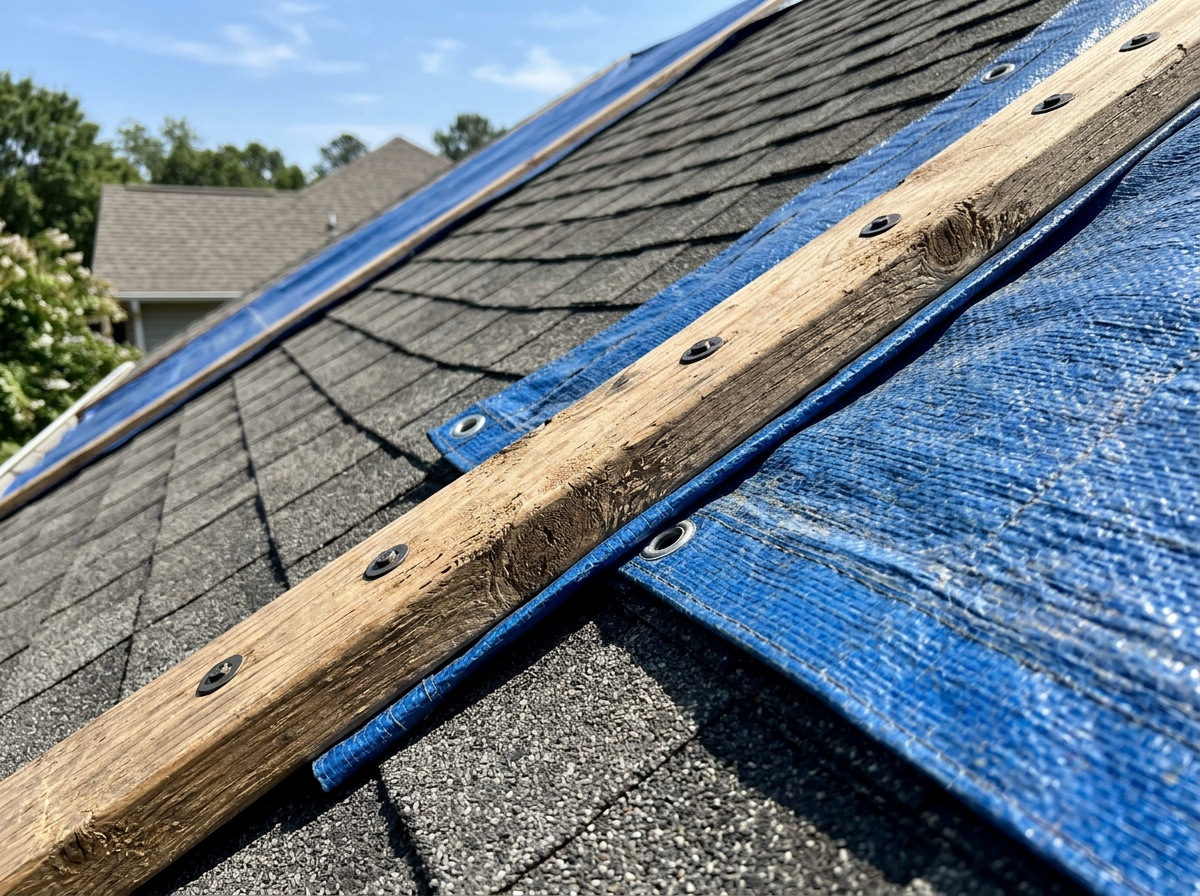
The edges of the tarp are sandwiched between two 2×4 wood furring strips and mechanically fastened into the underlying roof rafters with exterior construction screws. This distributes tension evenly across the entire tarp plane, preventing wind from getting underneath the tarp during subsequent storms while keeping the property 100% watertight until permanent roofing repairs begin.
For exterior window and door breaches, emergency board-up must be executed without damaging structural masonry or brick veneer. Professional contractors use tension-bolt bracing systems: exterior 5/8-inch CDX plywood panels are clamped against interior 2×4 framing members using threaded steel rods, securing the opening tightly against 80+ MPH winds without drilling holes into brick or stone facades.
Detailed photo-documentation of the emergency securing process is compiled for the insurance adjuster. These mitigation costs are directly reimbursable under the policy’s ‘Reasonable Repairs’ endorsement, guaranteeing that policyholders receive full financial reimbursement for emergency response fees.
From a structural mitigation standpoint, emergency storm response requires immediate stabilization of load-bearing building components before exterior moisture creates irreversible rot. Licensed crews deploy commercial crane rigging, screw-jack timber shoring, and heavy-duty 2×4 furring strip sandwiching to prevent high wind gusts from lifting temporary roof tarps during severe weather fronts. These actions satisfy the homeowner policy’s mandatory ‘Duties After Loss’ clause.
To protect policyholder financial interests, all storm damage evidence is compiled into an indisputable scope package. High-resolution drone aerials document shingle uplift, creased shingle tabs, and damaged ridge vents, while thermal moisture mapping tracks water ingress paths through ceilings. These forensic records are cross-referenced with local Doppler radar wind speed data, ensuring insurance carriers cannot improperly attribute wind-driven water losses to excluded surface flooding.
Following catastrophic severe weather events, structural storm restoration requires coordinating municipal building code compliance with carrier claims. City building inspectors frequently enforce emergency post-disaster guidelines that mandate certified crane extraction for fallen timber on roof trusses and immediate weatherproofing of open roof planes. Maintaining photographic proof of all fallen tree diameter measurements, crane rigging setups, and 2×4 furring strip tarp installations protects homeowners from out-of-pocket costs and guarantees full carrier reimbursement under emergency mitigation coverage.
If wind-driven rain has already penetrated into drywall cavities, follow our immediate steps for psychrometric drying in the first 24 hours. To understand carrier policy differences between wind and flood damage, review our forensic guide on wind-driven rain vs surface flooding. Discover all disaster resources in our Storm Recovery Knowledge Center.