Following major hurricanes, tropical storms, or torrential severe weather events, thousands of homeowners face unexpected claim denials due to a complex insurance clause known as the Anti-Concurrent Causation (ACC) endorsement. Understanding the legal and forensic distinction between wind damage and flood damage is critical for protecting your claim.
Standard homeowner insurance policies (HO-3 and HO-5) cover damage caused by wind, hail, and wind-driven rain—provided that the wind created an initial opening in the roof or building envelope through which rain entered. However, standard policies strictly exclude surface flooding, storm surge, and ground runoff, which require a separate policy through FEMA’s National Flood Insurance Program (NFIP).
Under an anti-concurrent causation clause, if a property suffers simultaneous wind damage and flood damage, the carrier may attempt to deny the entire claim by arguing that the excluded peril (flood) contributed to the loss. To overcome this, homeowners must establish clear forensic timeline proof of the ‘proximate efficient cause.’
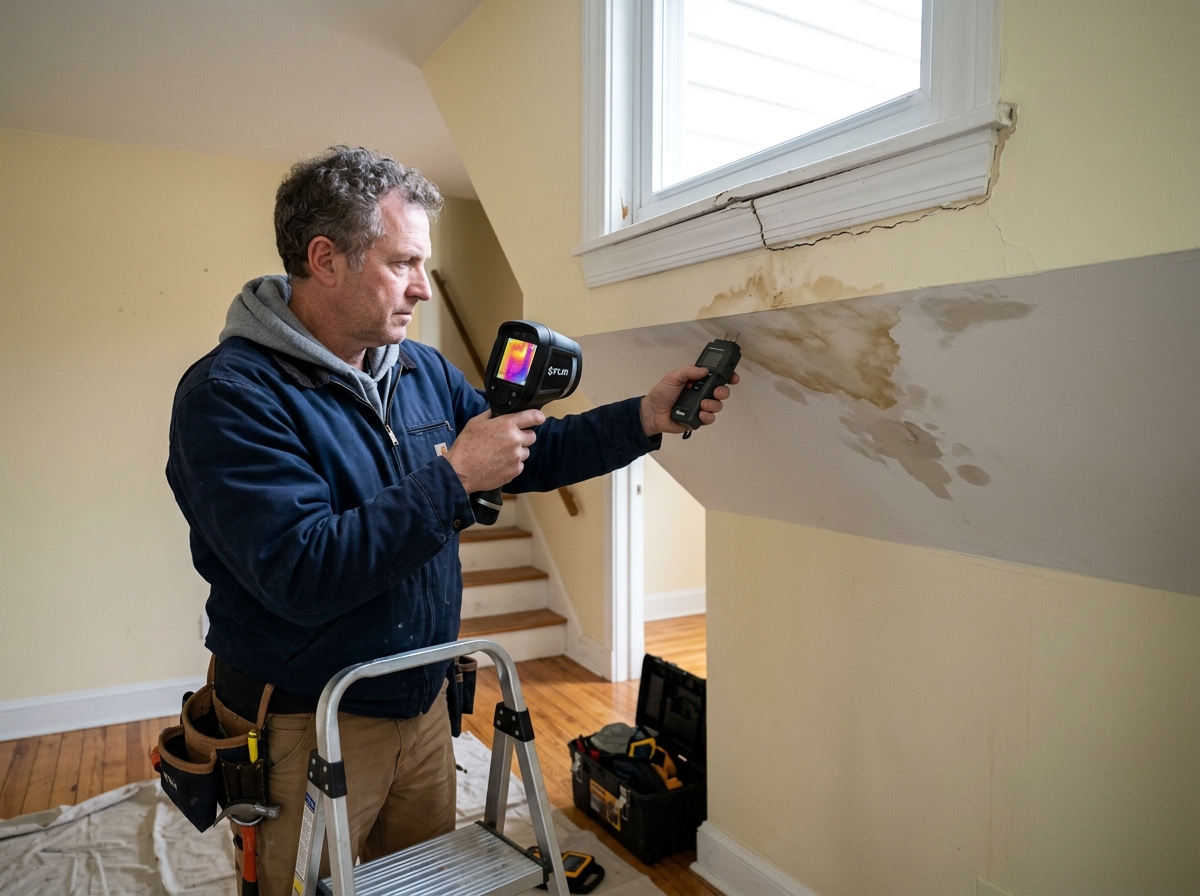
Our general contracting and forensic assessment team documents physical evidence before any debris is moved: high-resolution drone aerials of lifted shingles, micro-fractured ridge caps, windward window seal failures, water line stain heights on interior drywall, and barometric pressure records. This forensic scope proves that wind created the initial breach hours before rising ground waters occurred.
Engineering documentation also includes analyzing directional wind vectors recorded by local National Weather Service (NWS) Doppler radar stations during the storm peak. By correlating wind velocity vectors with structural impact points on upper gables and soffits, we demonstrate indisputable physical proof that roof shingle creasing preceded flood inundation.
This forensic evidence package enables policyholders to overturn improper initial denials, allocate loss percentages accurately between primary homeowner carriers and flood policies, and ensure complete financial recovery for interior structural repairs.
From a structural mitigation standpoint, emergency storm response requires immediate stabilization of load-bearing building components before exterior moisture creates irreversible rot. Licensed crews deploy commercial crane rigging, screw-jack timber shoring, and heavy-duty 2×4 furring strip sandwiching to prevent high wind gusts from lifting temporary roof tarps during severe weather fronts. These actions satisfy the homeowner policy’s mandatory ‘Duties After Loss’ clause.
To protect policyholder financial interests, all storm damage evidence is compiled into an indisputable scope package. High-resolution drone aerials document shingle uplift, creased shingle tabs, and damaged ridge vents, while thermal moisture mapping tracks water ingress paths through ceilings. These forensic records are cross-referenced with local Doppler radar wind speed data, ensuring insurance carriers cannot improperly attribute wind-driven water losses to excluded surface flooding.
Following catastrophic severe weather events, structural storm restoration requires coordinating municipal building code compliance with carrier claims. City building inspectors frequently enforce emergency post-disaster guidelines that mandate certified crane extraction for fallen timber on roof trusses and immediate weatherproofing of open roof planes. Maintaining photographic proof of all fallen tree diameter measurements, crane rigging setups, and 2×4 furring strip tarp installations protects homeowners from out-of-pocket costs and guarantees full carrier reimbursement under emergency mitigation coverage.
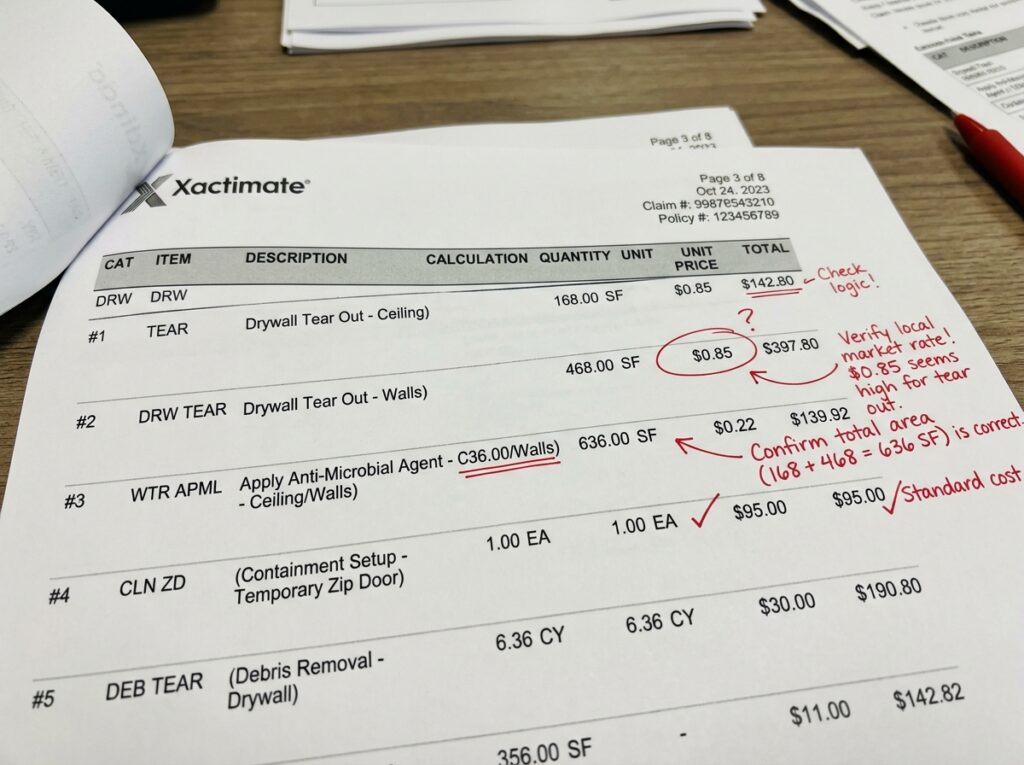
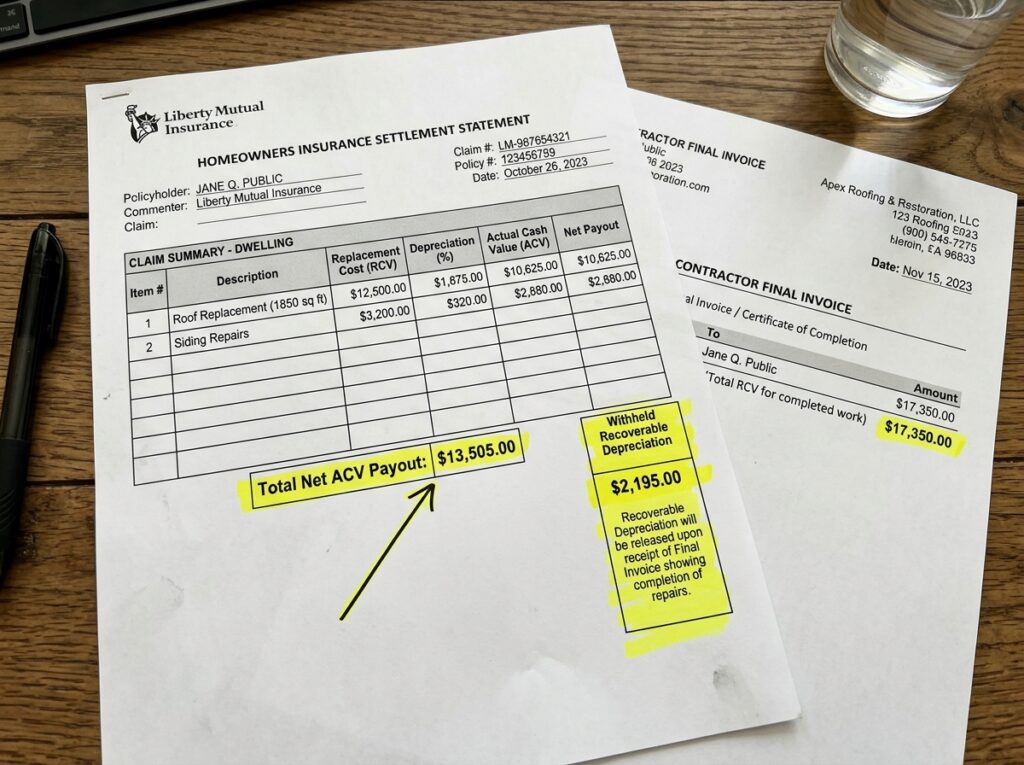
If you are facing scope or pricing stalemates with your insurance adjuster, learn how to invoke your policy rights in our guide on the insurance statutory appraisal clause. To maximize your line-item recovery, read decoding insurance Xactimate estimates. Explore full insurance guidelines in our Insurance Claims Hub.