When high storm winds or saturated soils uproot a mature hardwood tree and send it crashing into a residential roof, the immediate instinct of many homeowners is to call a local tree trimmer with chainsaws. However, haphazardly cutting up a heavy fallen tree resting on a damaged roof is extremely hazardous and can cause catastrophic structural collapse.
A multi-ton tree trunk creates immense downward compression and horizontal lateral loads on the home’s engineered roof trusses and exterior load-bearing walls. If limbs are cut off in the wrong sequence, the sudden shifting of weight can puncture the ceiling, kick out exterior walls, or crush the workers on site.
Licensed general contracting standards require a coordinated crane-lift extraction. A certified crane operator rigs nylon lifting straps to the main trunk, taking up line tension to carry the tree’s weight before certified arborists make a single cut. The tree is lifted vertically off the roof structure without exerting any rolling or drag forces across the framing.
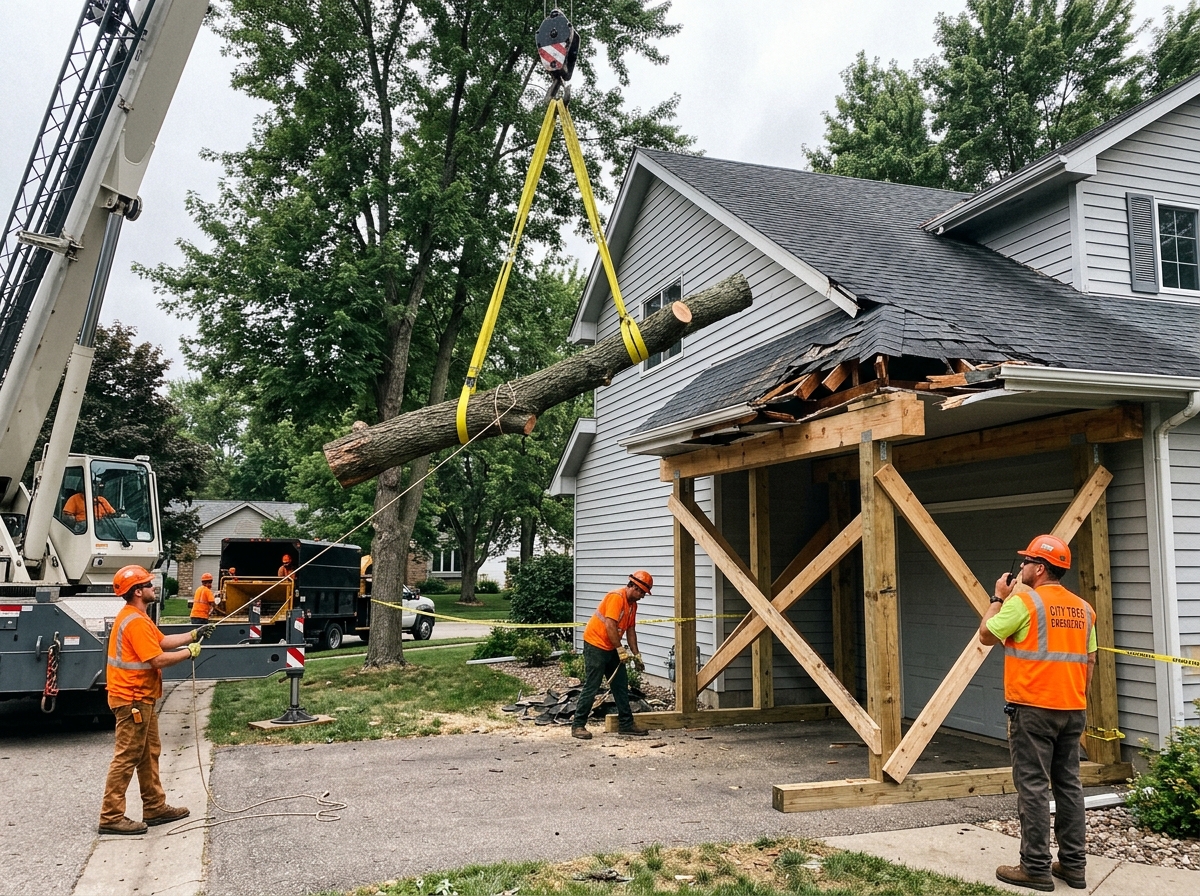
Simultaneously, our construction crew enters the attic or living space below to install temporary post-and-beam timber shoring. Heavy 4×4 or 6×6 vertical screw-jack posts distribute the load down to solid foundation footings, stabilizing fractured rafters and allowing safe debris clean-out before permanent engineered truss sistering begins.
After crane extraction is completed, a licensed structural engineer inspects the entire roof framing system. Impact forces frequently crack chord members several rafter bays away from the primary point of impact, pop sheetrock fasteners, and shift wall top plates. All compromised timbers are marked for sistering or replacement.
Immediate weather protection is then established over the exposed roof breach using furred heavy-duty tarps, preventing secondary rain damage while structural repair plans and city building permits are finalized.
From a structural mitigation standpoint, emergency storm response requires immediate stabilization of load-bearing building components before exterior moisture creates irreversible rot. Licensed crews deploy commercial crane rigging, screw-jack timber shoring, and heavy-duty 2×4 furring strip sandwiching to prevent high wind gusts from lifting temporary roof tarps during severe weather fronts. These actions satisfy the homeowner policy’s mandatory ‘Duties After Loss’ clause.
To protect policyholder financial interests, all storm damage evidence is compiled into an indisputable scope package. High-resolution drone aerials document shingle uplift, creased shingle tabs, and damaged ridge vents, while thermal moisture mapping tracks water ingress paths through ceilings. These forensic records are cross-referenced with local Doppler radar wind speed data, ensuring insurance carriers cannot improperly attribute wind-driven water losses to excluded surface flooding.
Following catastrophic severe weather events, structural storm restoration requires coordinating municipal building code compliance with carrier claims. City building inspectors frequently enforce emergency post-disaster guidelines that mandate certified crane extraction for fallen timber on roof trusses and immediate weatherproofing of open roof planes. Maintaining photographic proof of all fallen tree diameter measurements, crane rigging setups, and 2×4 furring strip tarp installations protects homeowners from out-of-pocket costs and guarantees full carrier reimbursement under emergency mitigation coverage.
Once the structure is safely stabilized, review our contractor protocols for emergency roof tarping with furring strips. For navigating municipal permits and engineering specs, see navigating structural rebuilds and city permits. Find complete emergency contacts on our Emergency Dispatch Page.