Attic mold is one of the most common issues discovered during residential home sales and property inspections. Homeowners are often bewildered to find their north-facing roof sheathing covered in black and white fungal growth despite having a watertight roof with zero active rain leaks.
The root cause of attic mold is almost always a failure of building envelope physics: warm, moist interior air escapes from the living space through recessed ceiling lights, unsealed attic access hatches, and bathroom exhaust fans improperly vented directly into the attic. During winter months, this warm moisture condenses against the freezing underside of the roof plywood sheathing, creating an ideal incubator for mold spores.
Inadequate attic ventilation compounds the problem. When insulation contractors inadvertently block the soffit eave vents with blown-in fiberglass, natural convective airflow from the soffits up to the ridge vent is choked off. Moisture remains trapped, leading to severe condensation, wood rot, and winter ice damming along roof gutters.
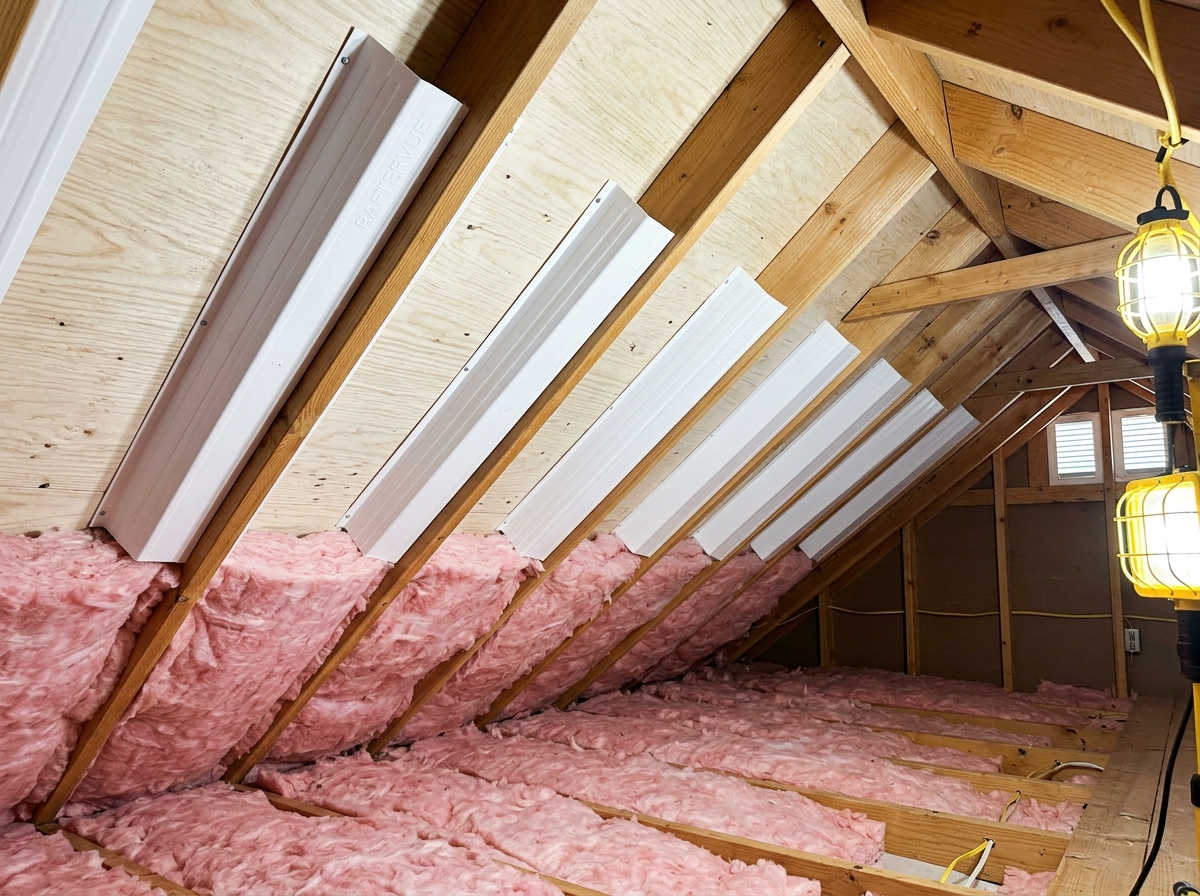
Professional remediation requires two steps: structural cleaning and airflow correction. Certified crews erect containment and use specialized abrasive baking soda (sodium bicarbonate) blasting to strip mold hyphae out of the wood grain without gouging the roof sheathing. Technicians then install PVC ventilation baffle chutes at every rafter bay and reroute all exhaust ducts through the roof cap to outside air.
Following soda blasting, all blasted sodium bicarbonate dust and dislodged fungal debris are extracted using commercial HEPA-filtered backpack vacuums. The cleaned plywood sheathing and roof trusses are treated with an EPA-registered fungicidal timber wash to neutralize any remaining fungal root structures embedded in the wood pores.
Finally, air sealing is performed across the attic floor plane: expanding closed-cell foam is injected around electrical penetrations, plumbing vent stacks, and top plates. This complete building-envelope remediation eliminates the convective stack effect, permanently protecting the attic from future condensation and mold recurrence.
From an indoor environmental engineering perspective, establishing airtight physical containment also requires continuous differential pressure monitoring. Digital recording manometers measure pressure differentials down to thousandths of an inch of water column, sounding automatic audible alarms if duct seals breach or pressure drops below -0.02 in. WC. This failsafe mechanism ensures that fungal spores, micro-particulates, and mycotoxin dust are 100% trapped within the HEPA filtration envelope.
Following remediation and antimicrobial sealing, formal Post-Remediation Verification (PRV) testing is coordinated with an independent third-party Indoor Environmental Professional (IEP). The IEP performs visual white-glove dust inspections and collects comparative spore trap air samples (Air-O-Cell cassettes). Remediation containment barriers are removed only after the certified laboratory issues a formal pass letter confirming indoor spore counts are within healthy background ranges.
Biological mold remediation must also account for cross-contamination pathways through the home’s heating, ventilation, and air conditioning (HVAC) systems. Prior to starting negative air containment machines, the HVAC return and supply vents inside the work zone are sealed with 6-mil polyethylene and heavy-duty tape. Air handling units are shut down to prevent the furnace blower from circulating disturbed fungal spores into occupied bedrooms and common living areas, ensuring that the containment envelope remains completely isolated from the rest of the dwelling.
For related exterior roof repair specifications, see our guide on emergency roof tarping and storm recovery. To navigate building permit requirements for structural roof reconstruction, review navigating structural rebuilds and city permits. Explore all building sciences in our Rebuild Guidance Hub.